The video will be updated shortly — meanwhile, explore the article for the latest updates.
As a manager, scheduling regular 1:1 meetings with your direct reports is crucial for maintaining strong communication, offering feedback, and fostering professional growth. Keka provides an easy-to-use platform that allows you to efficiently schedule, track, and manage 1:1 meetings. This guide will walk you through the process of setting up these meetings, using templates, and customising agendas.
Steps to schedule 1:1 Meetings as a manager in Keka
Accessing the 1:1 Meetings Module
Go to the My Team section and select Direct Reports under Performance to view meetings with your direct reports.
-
Click Schedule 1:1 Meeting in the top-right corner of the 1:1 Meetings page to create a new meeting.
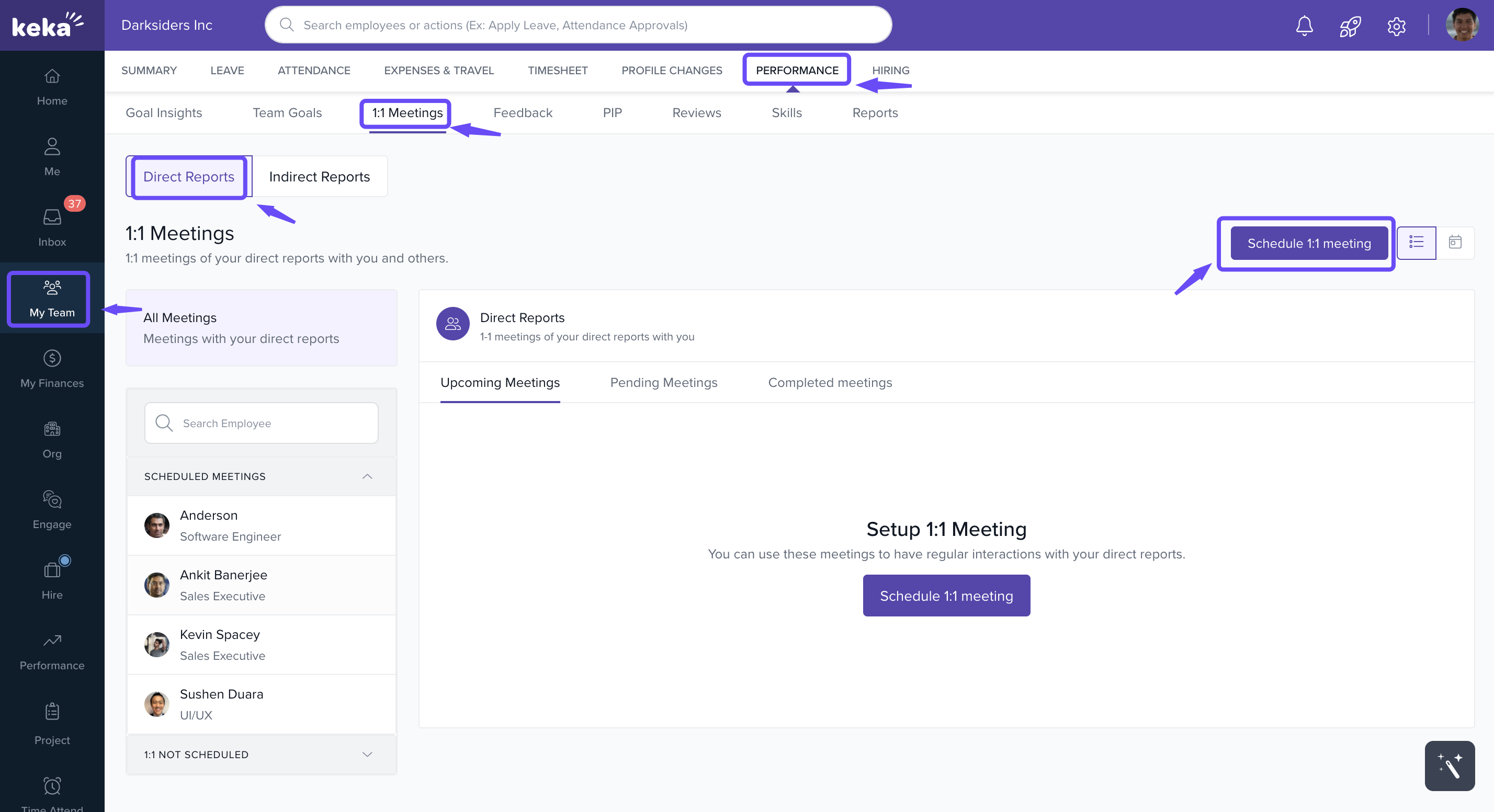
Scheduling a New 1:1 Meeting
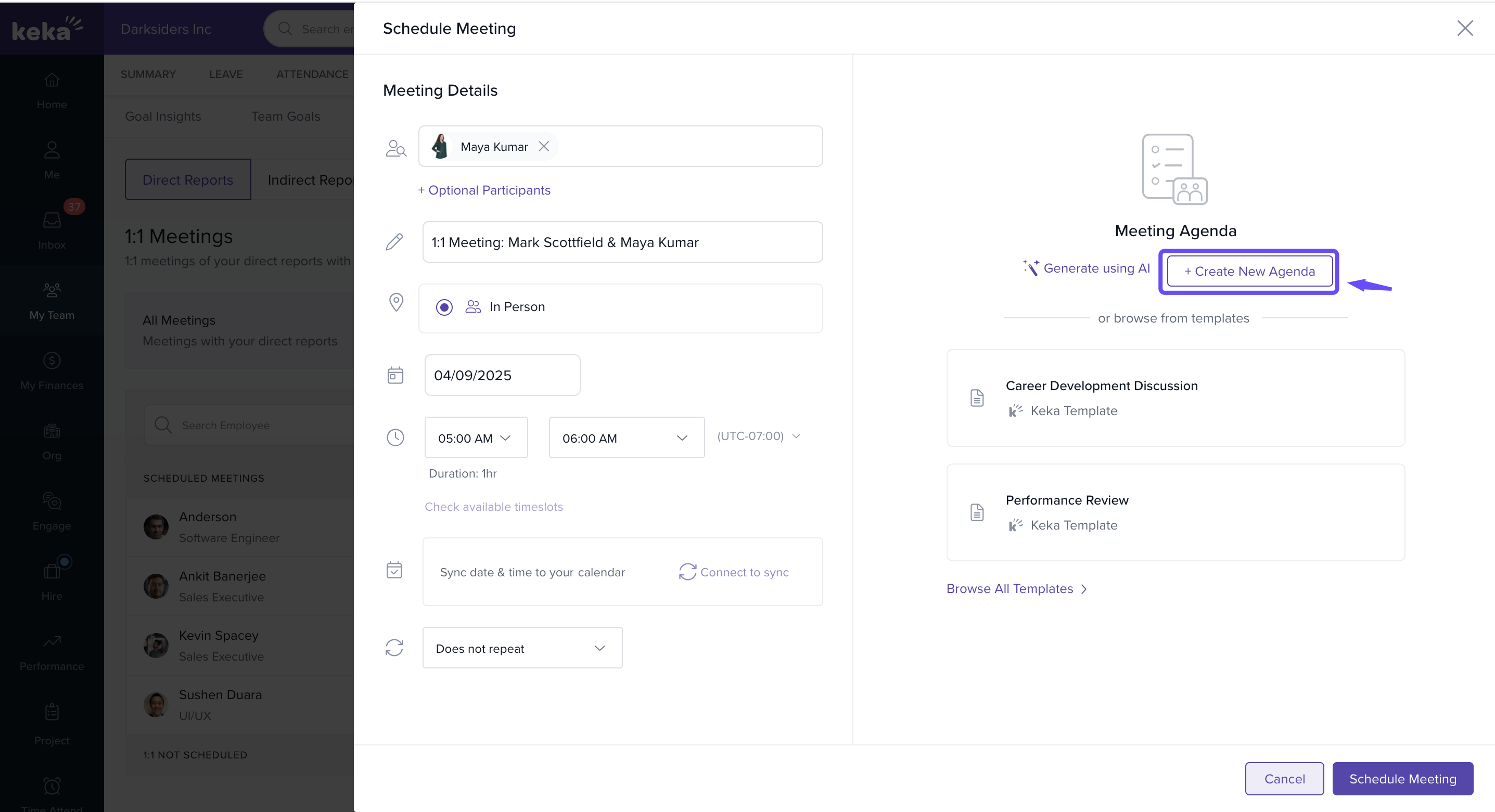
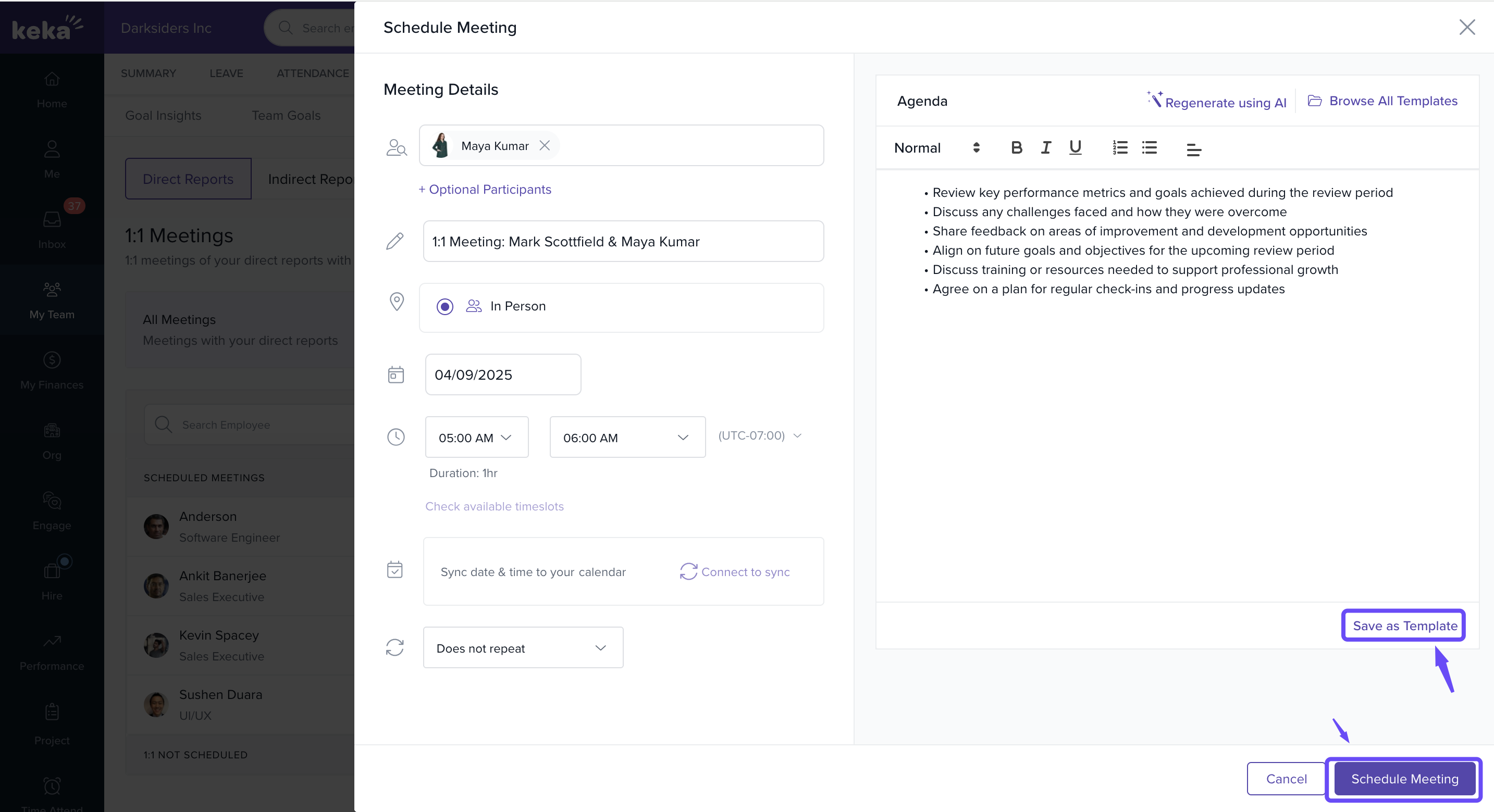
In the Schedule Meeting form, add participants by typing their names or emails, and include optional participants if needed.
Enter a meaningful meeting title (e.g., 1:1 Meeting: Mark Scottfield & Maya Kumar).
Choose the location of the meeting, such as In Person, Zoom, Microsoft Teams, or Google Meet.
Set the date, start time, and end time, and use Check available timeslots to avoid scheduling conflicts.
-
Decide whether the meeting will repeat (e.g., weekly, monthly) or be a one-time event.
Defining the Agenda
-
In the Agenda section, click + Create New Agenda to define your own meeting agenda with topics, discussion points, and estimated durations.
-
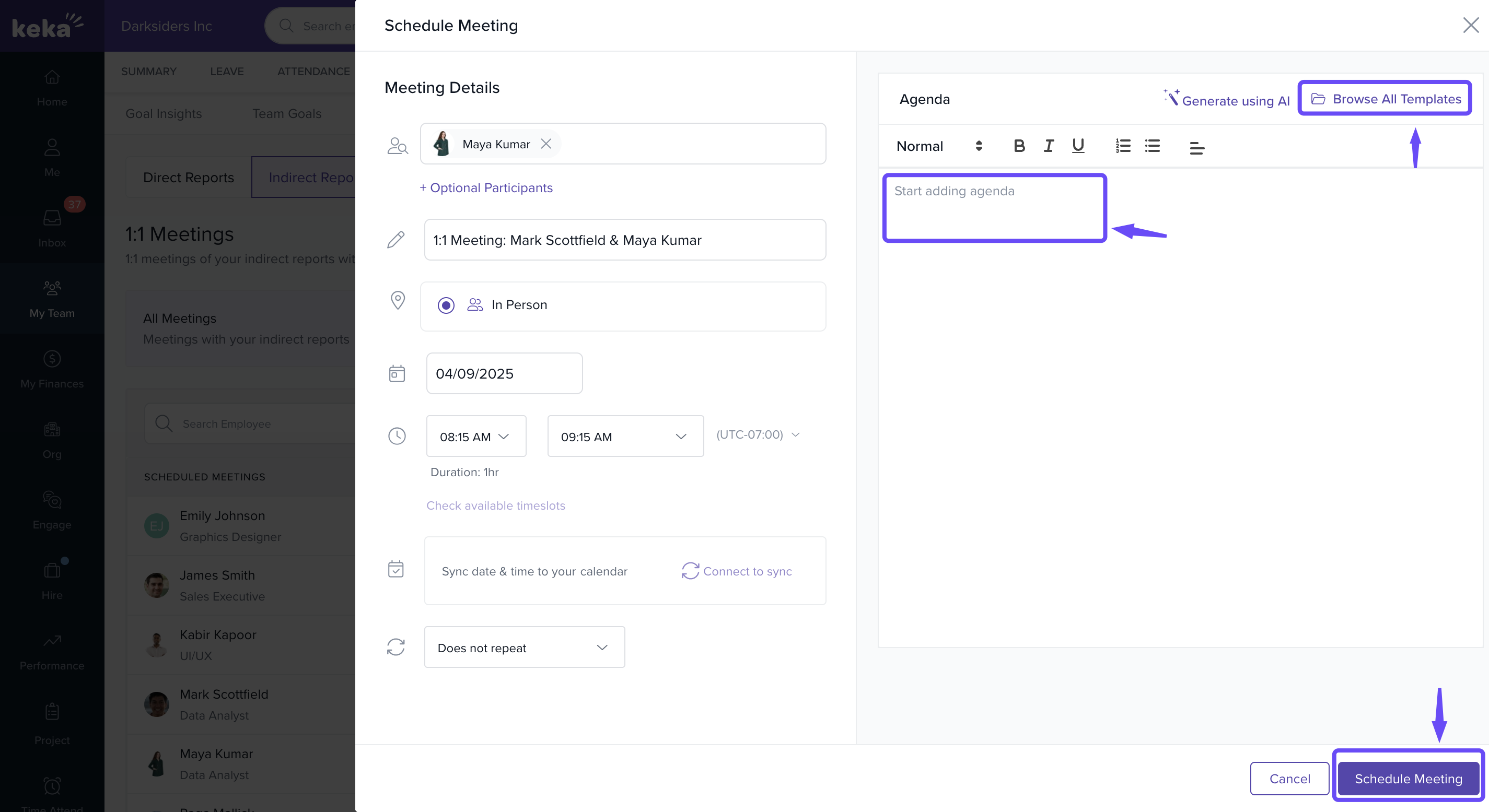
Add your meeting agenda and click Schedule Meeting to confirm the 1:1 meeting. You can also use Browse All Templates to choose from predefined options like Performance Review, Career Development Discussion, or Feedback Session.
-
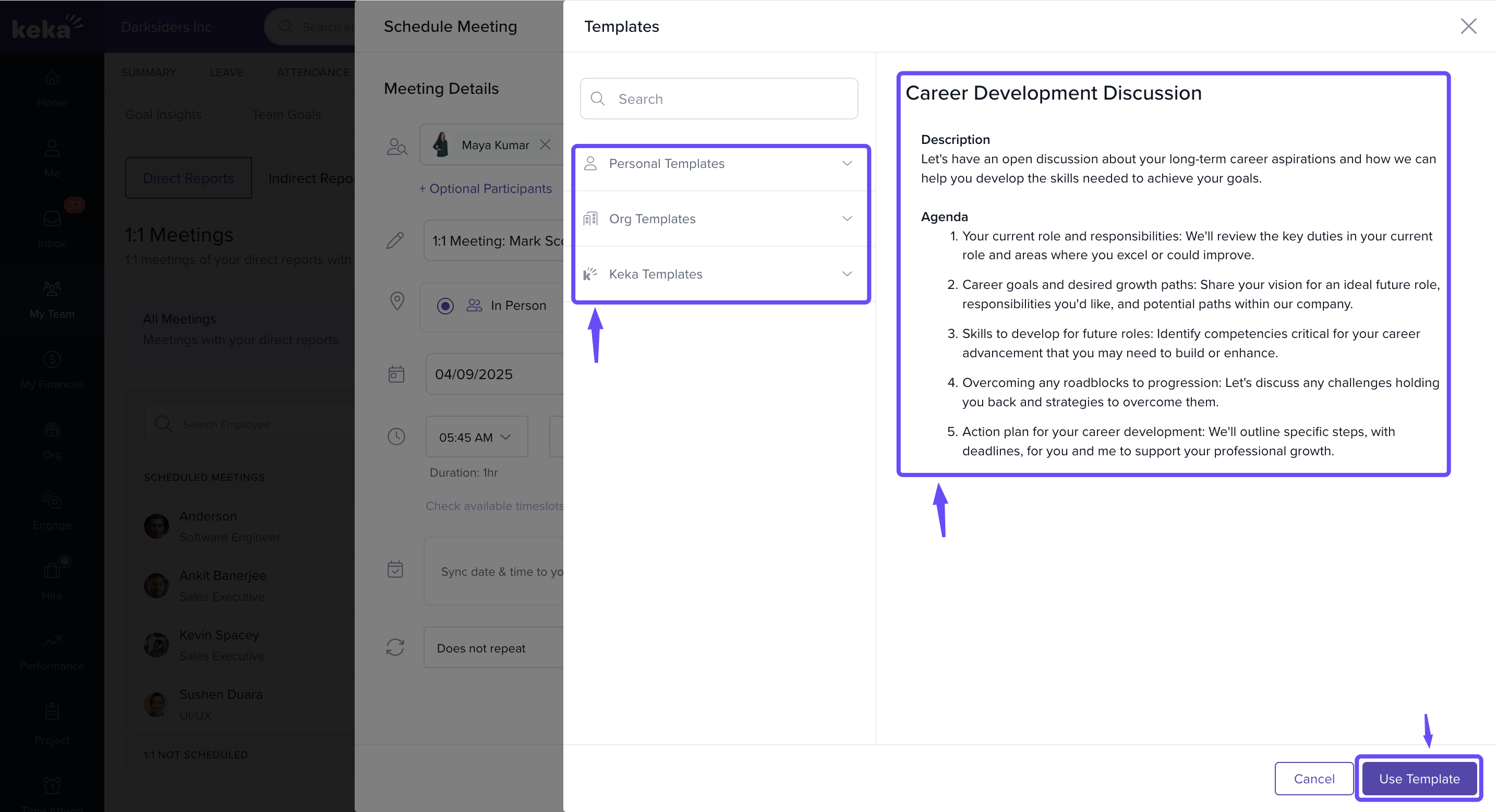
When you use Browse All Templates, you can choose from predefined agenda templates categorised as personal, organisation, or Keka templates—such as Performance Review or Career Development Discussion—which will automatically fill your agenda. Once you’ve made your selection, click Use Template to apply it.
-
If you prefer an automated approach, click Generate using AI to let Keka suggest a tailored agenda based on the title, purpose, or meeting type.
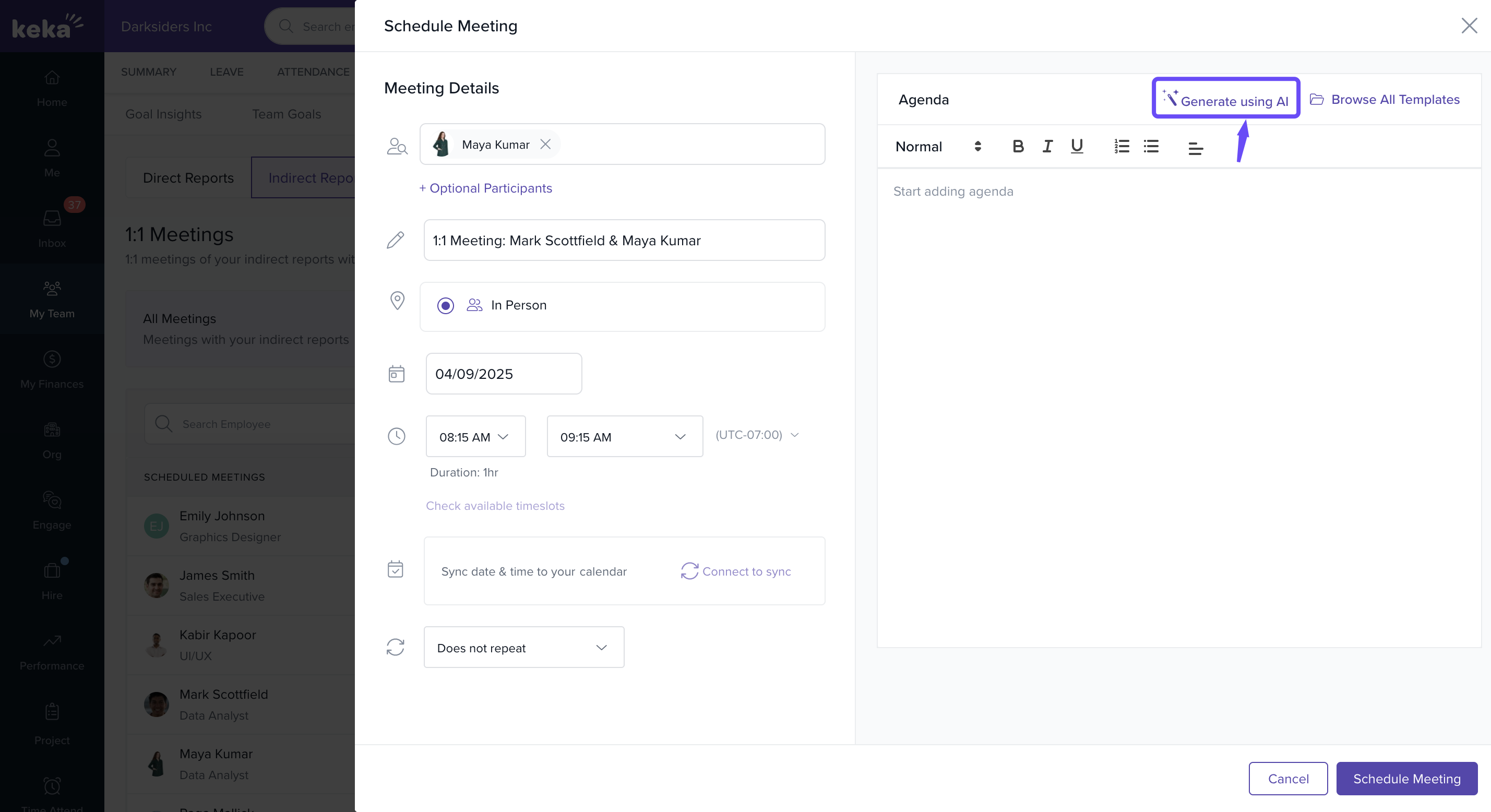
Update the AI-generated agenda or template by adding, removing, or reordering items to fit the discussion topics. Assign specific agenda items to participants so they can prepare in advance.
Creating Agenda Using AI
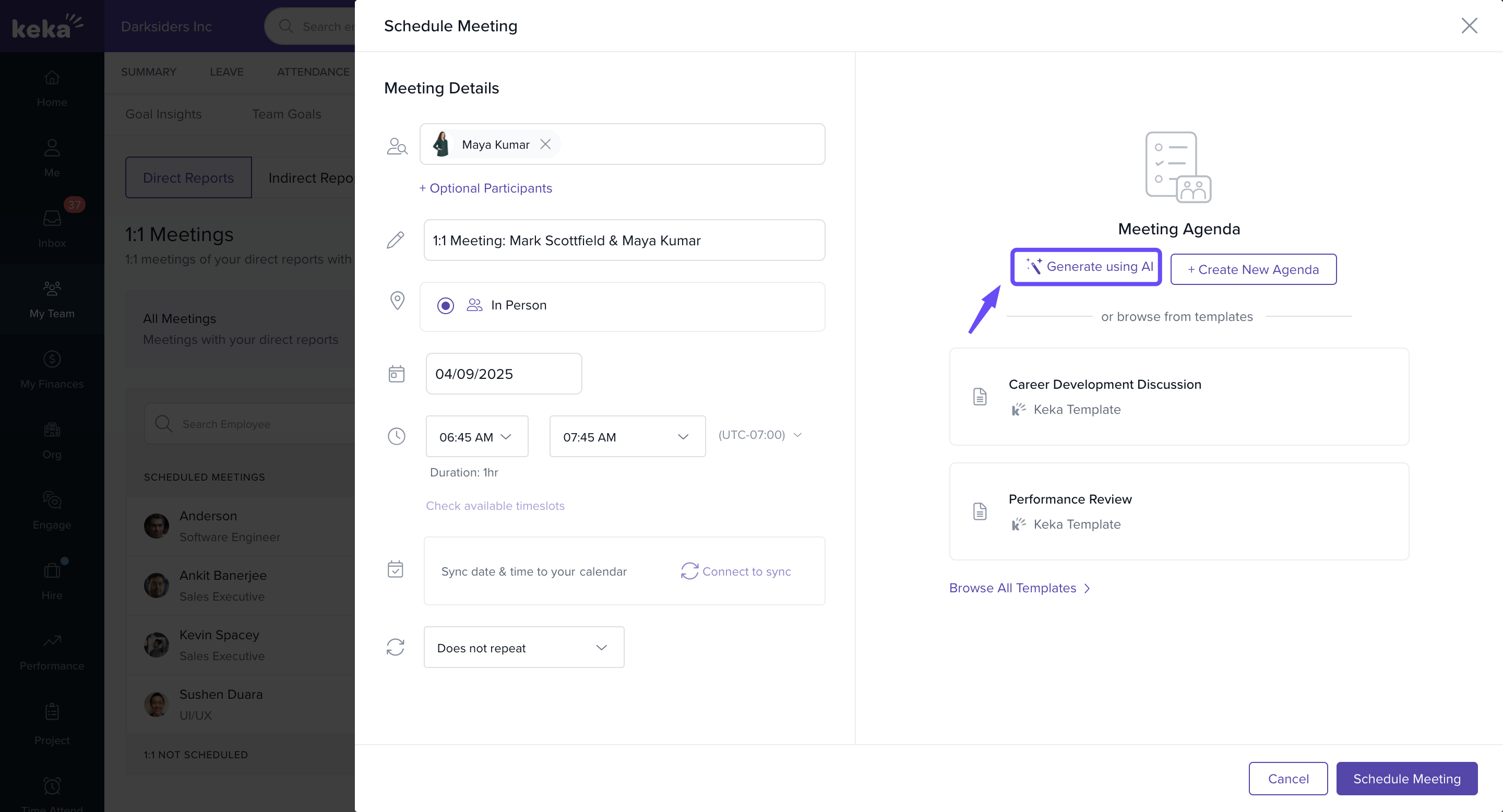
- If you prefer an automated approach, Keka provides the option to Generate Agenda Using AI. This feature uses artificial intelligence to create a comprehensive agenda based on your meeting title and purpose.
-
Simply click on the Generate using AI button, and Keka will suggest a tailored agenda for your meeting.
-
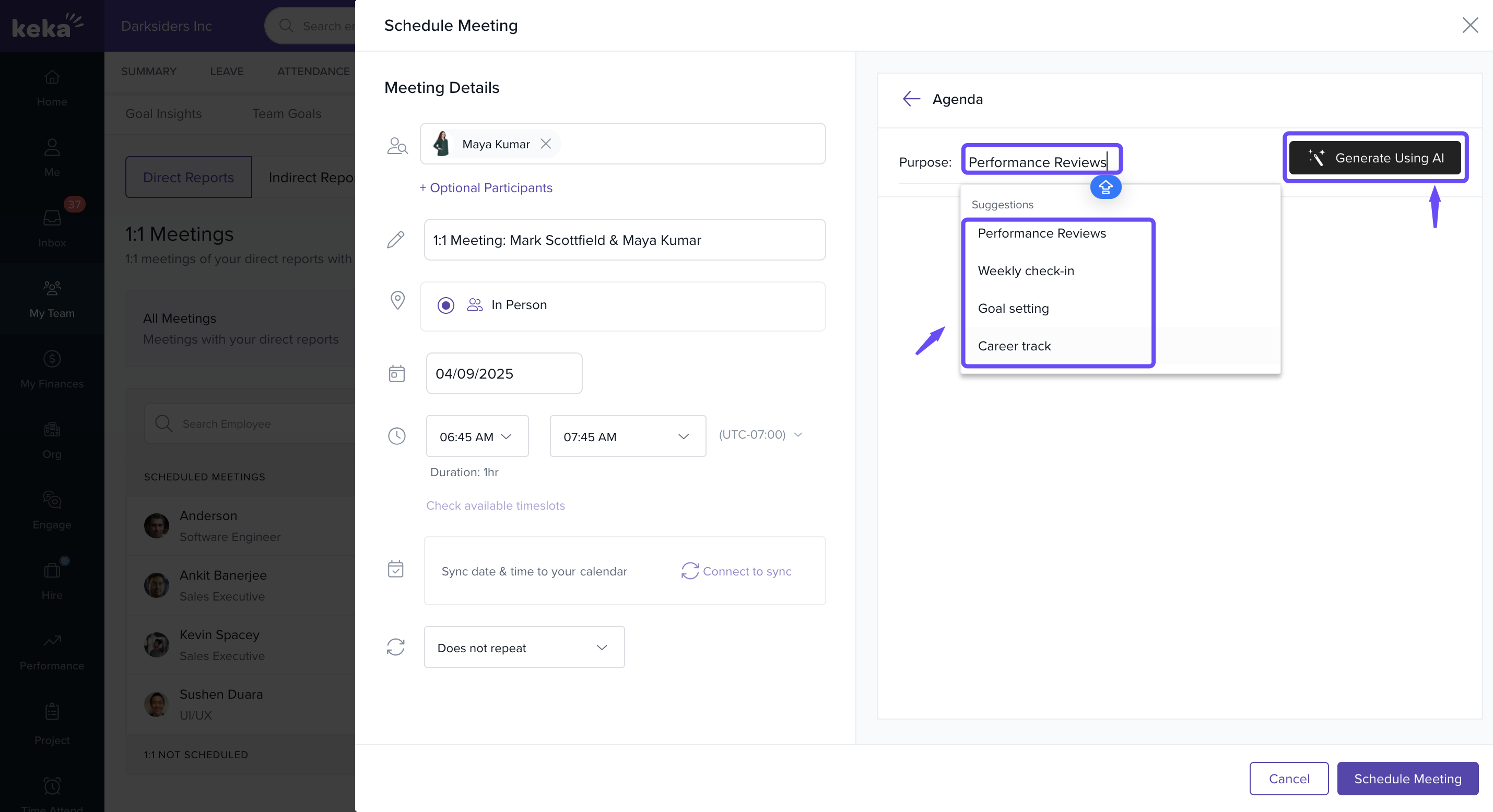
The AI-generated agenda will provide recommended discussion points tailored to your meeting’s purpose (such as Performance Review, Goal Setting, or Career Development). Choose the relevant purpose and click Generate Using AI again to update your agenda.
-
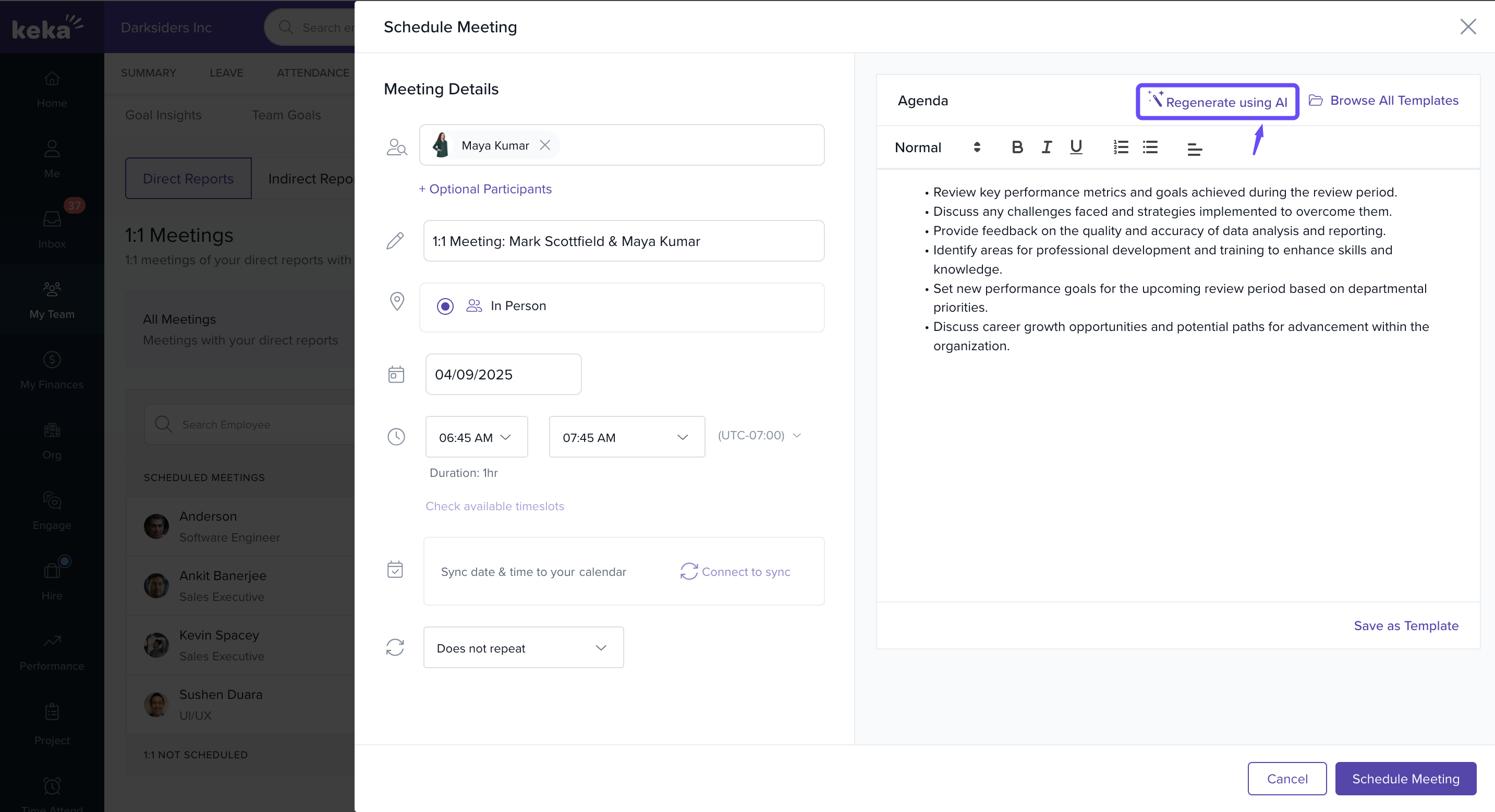
After your agenda is generated, you can customise it by adding, removing, or editing items to fit your meeting’s requirements. If you’re not satisfied with the suggestions, click Regenerate Using AI to create a new set of agenda points.
Saving and Finalising the Meeting
After completing the details, click Schedule Meeting to finalise the meeting and save it.
-
If you want to use the meeting setup for future sessions, click Save as Template to store it for later use.
Adding Action Items and Notes
-
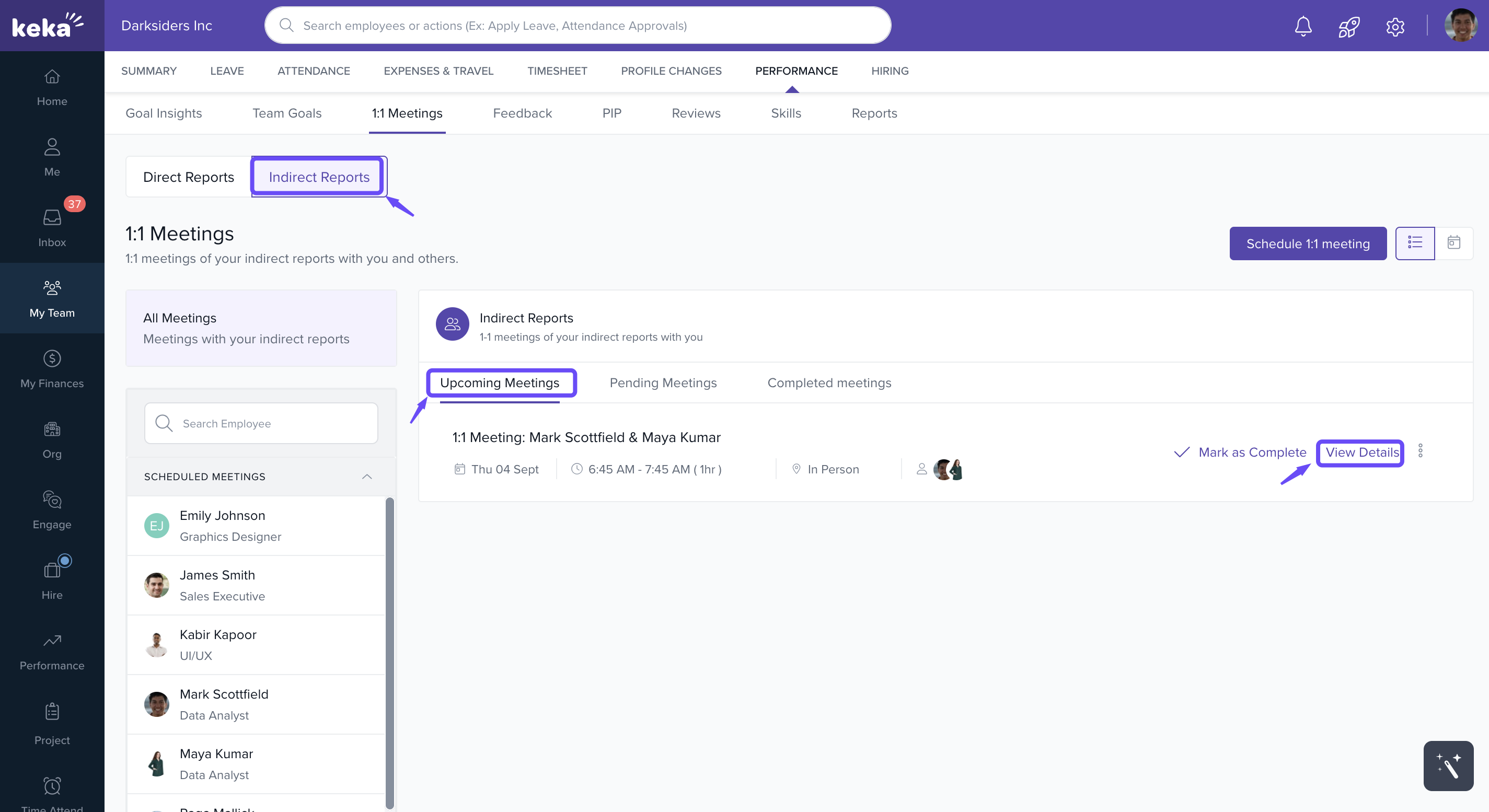
During or after the meeting, go to the Direct or Indirect Reports section and navigate to Upcoming Meetings. Click View Details for the relevant meeting to make any necessary edits.
-
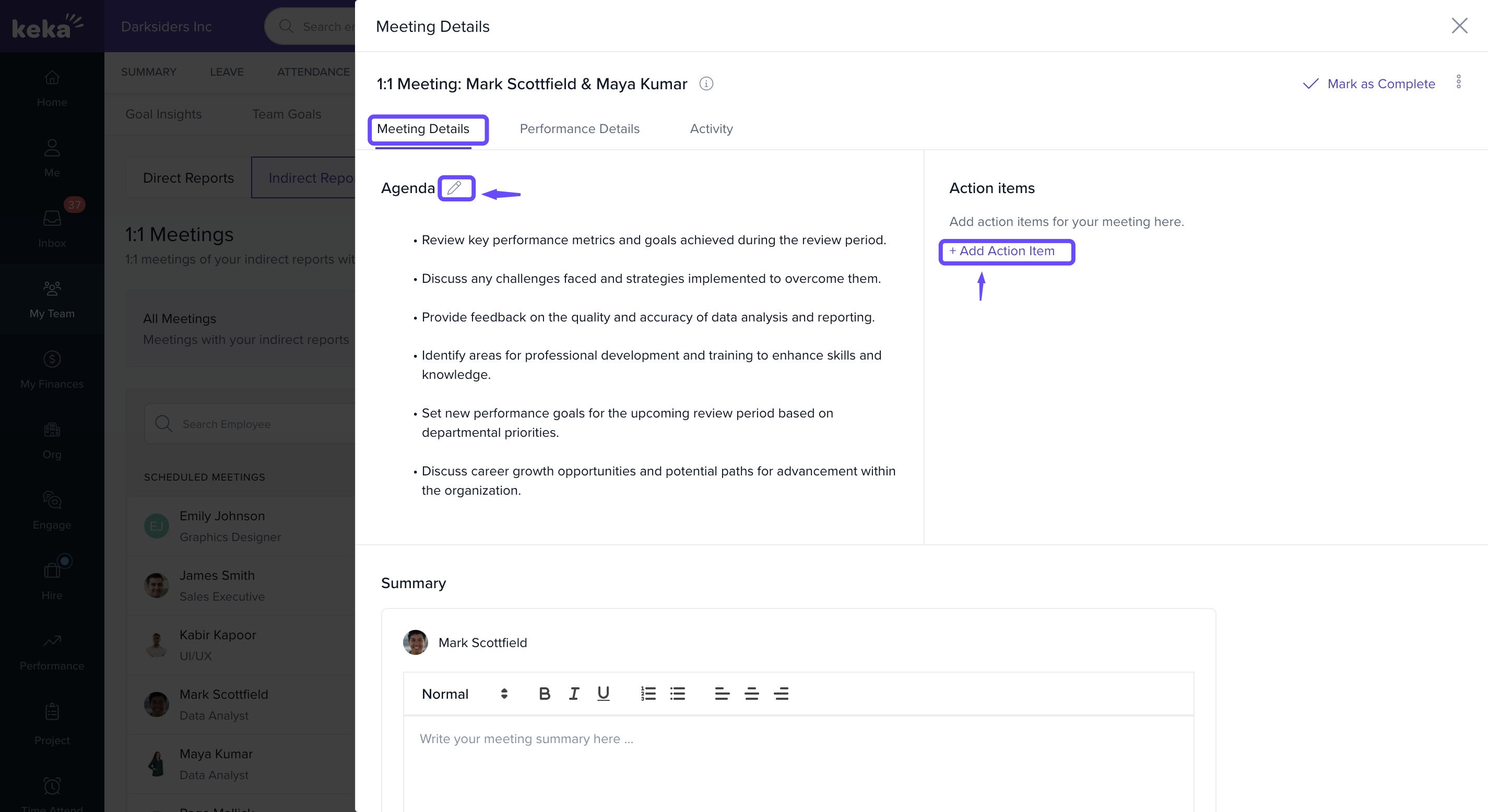
Click the pencil icon next to the agenda to make edits as needed. To document tasks or follow-up actions, select + Add Action Item.
-
Add the necessary action items, assign them to the appropriate participants, and set a due date. Click Add to save each item.
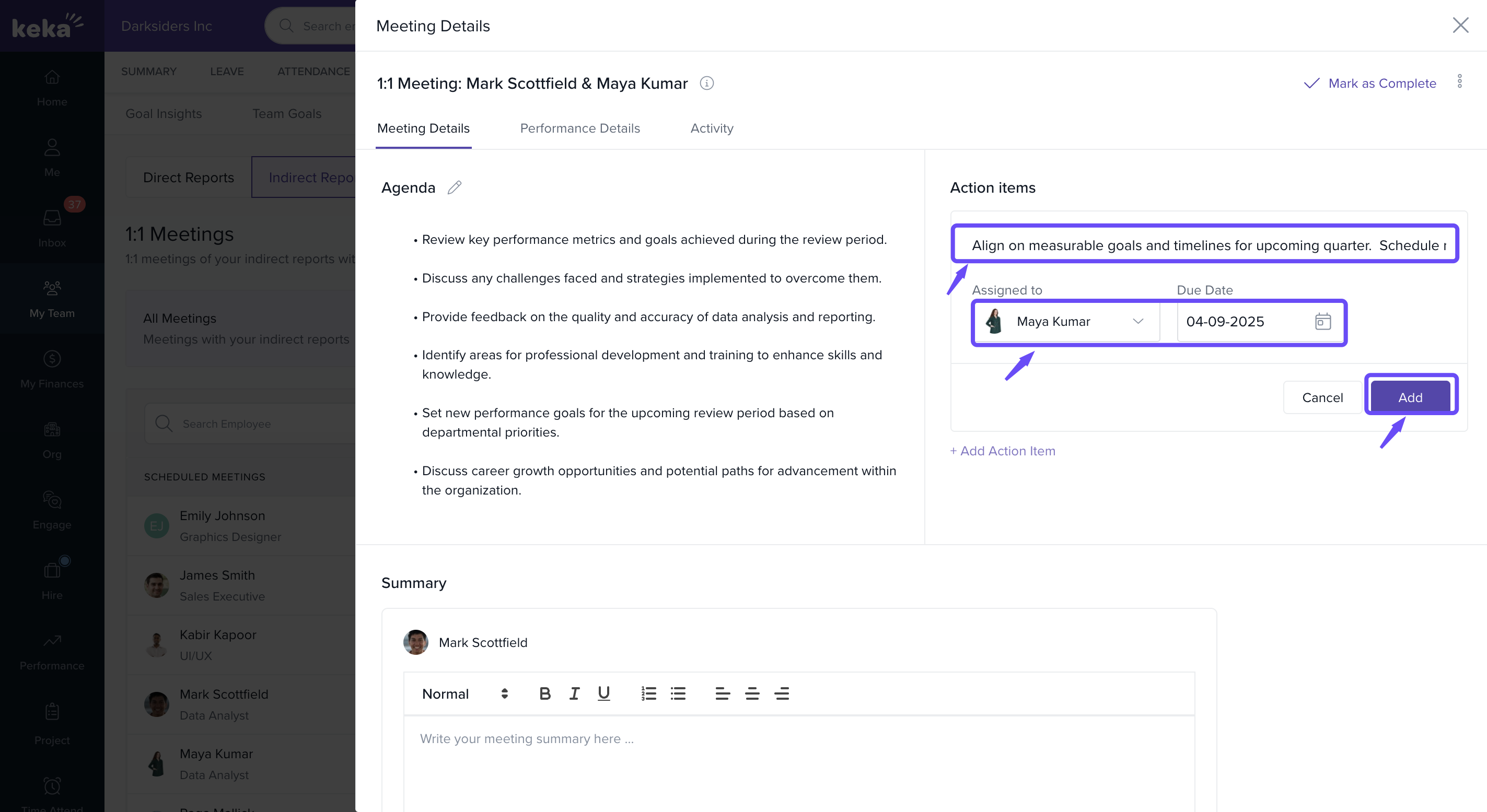
Once you add an action item, it will be listed under the Action Items section.
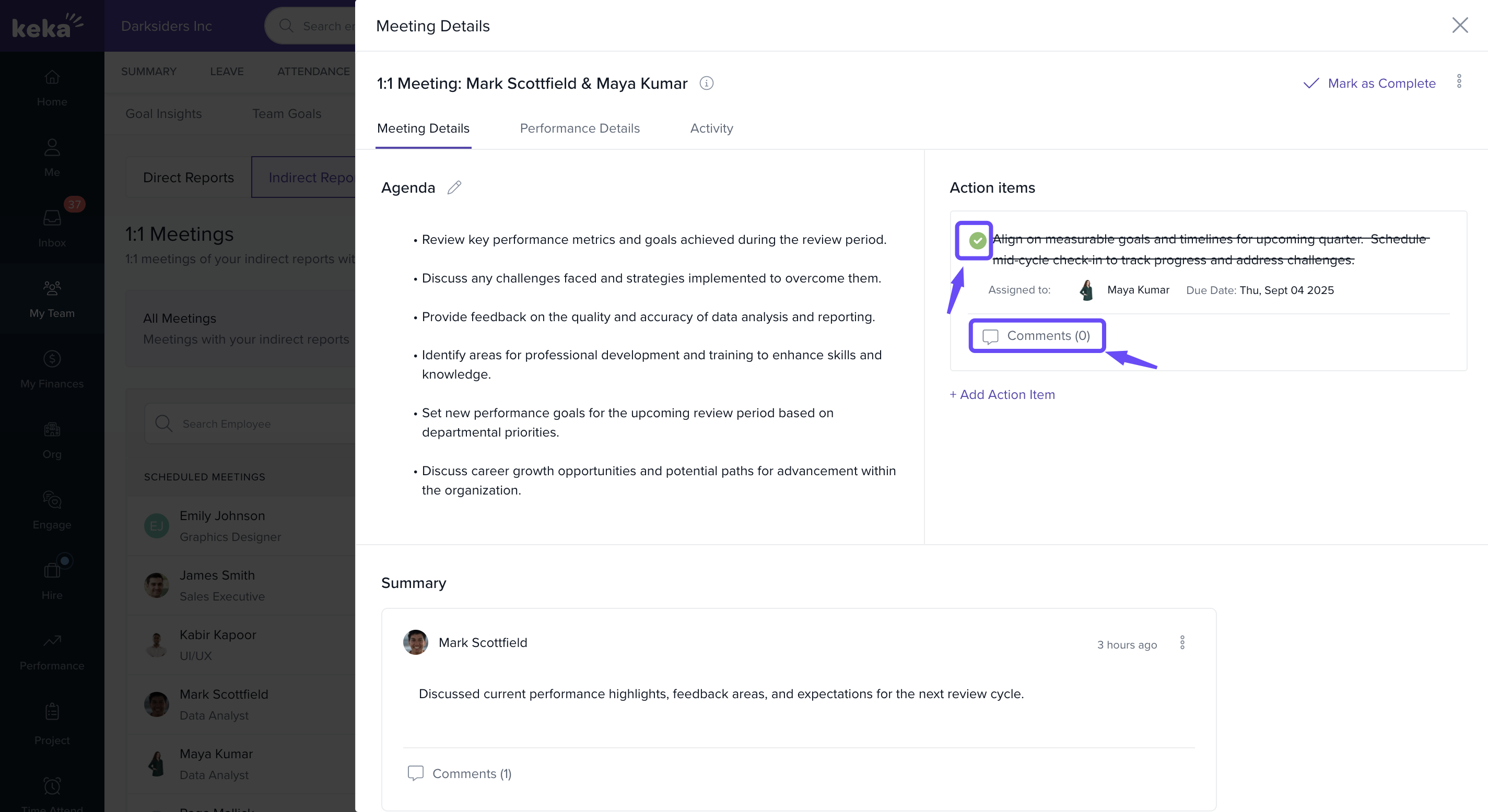
Mark an action item as completed by checking the checkbox beside the action item.
-
You can also add comments to any action item by clicking the Comments icon next to it.
-
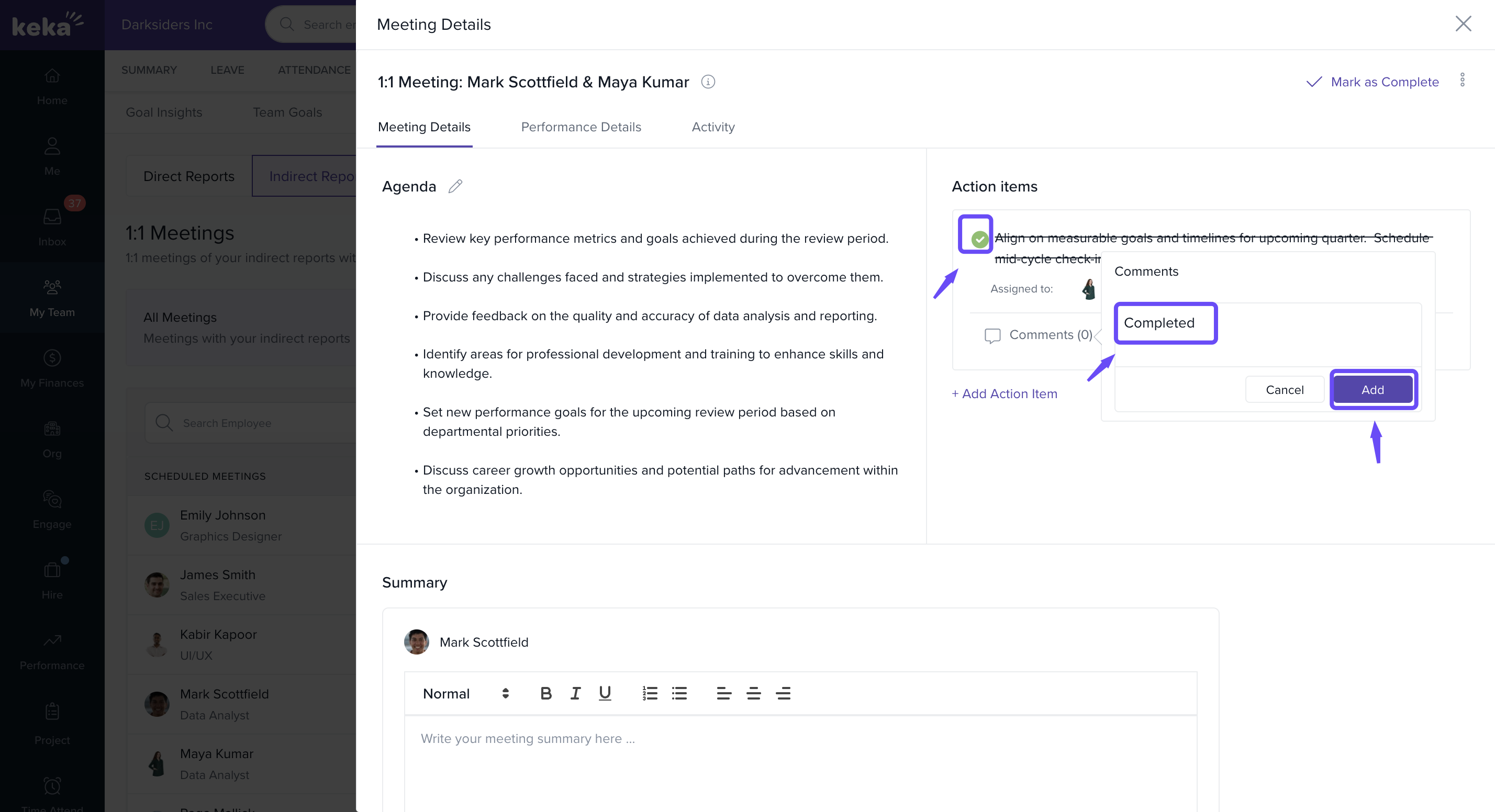
Once completed, mark the item as done by adding a completion comment like "Completed."
-
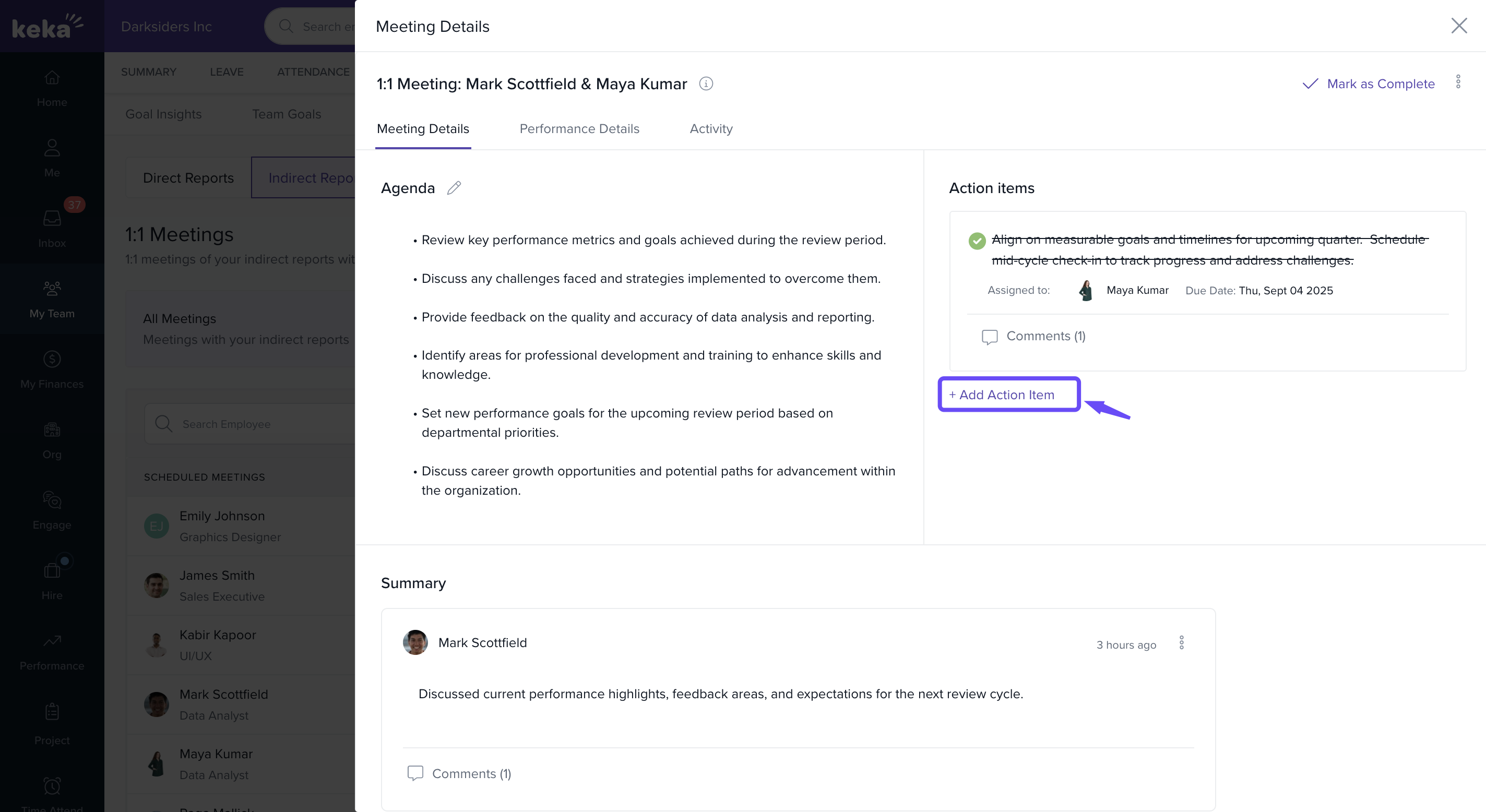
You can click + Add Action Item to capture specific tasks or follow-up actions.
-
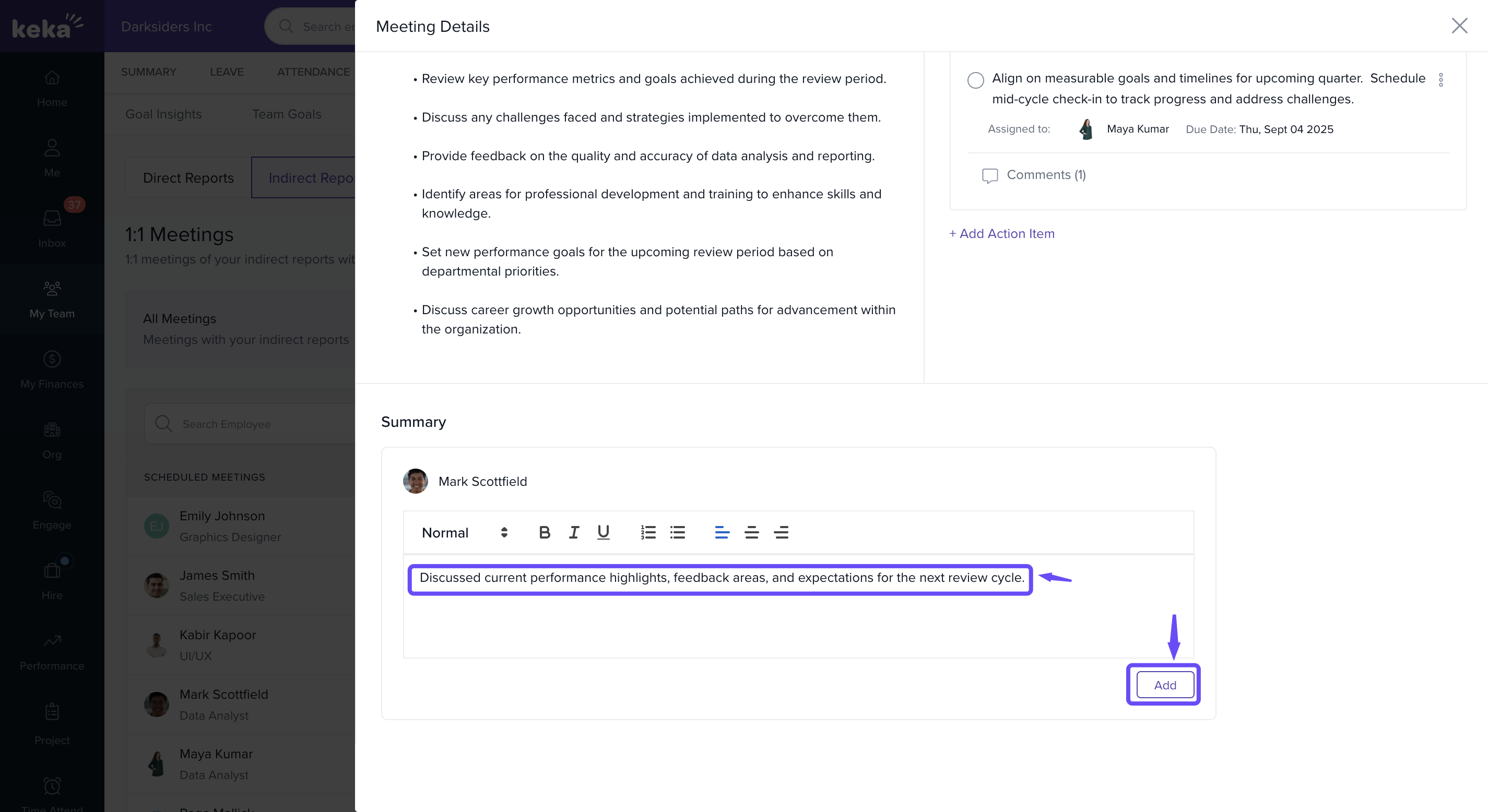
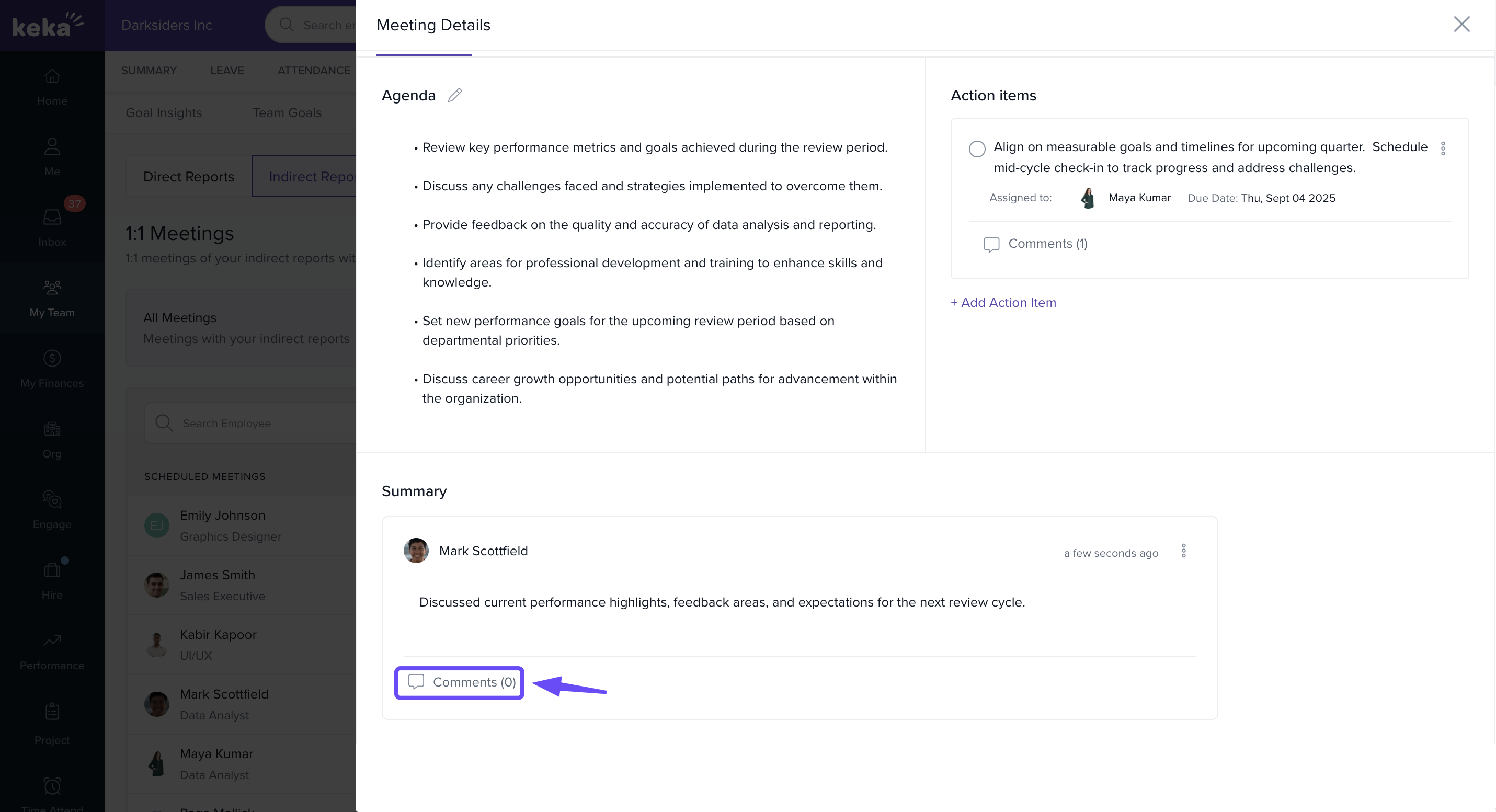
In the Summary section, capture key discussion points or outcomes from the meeting (for example, "Discussed current performance highlights, feedback areas, and next steps for the review cycle") and click Add to save your notes.
-
You can also add comments to any action item by clicking the Comments icon next to it.
-
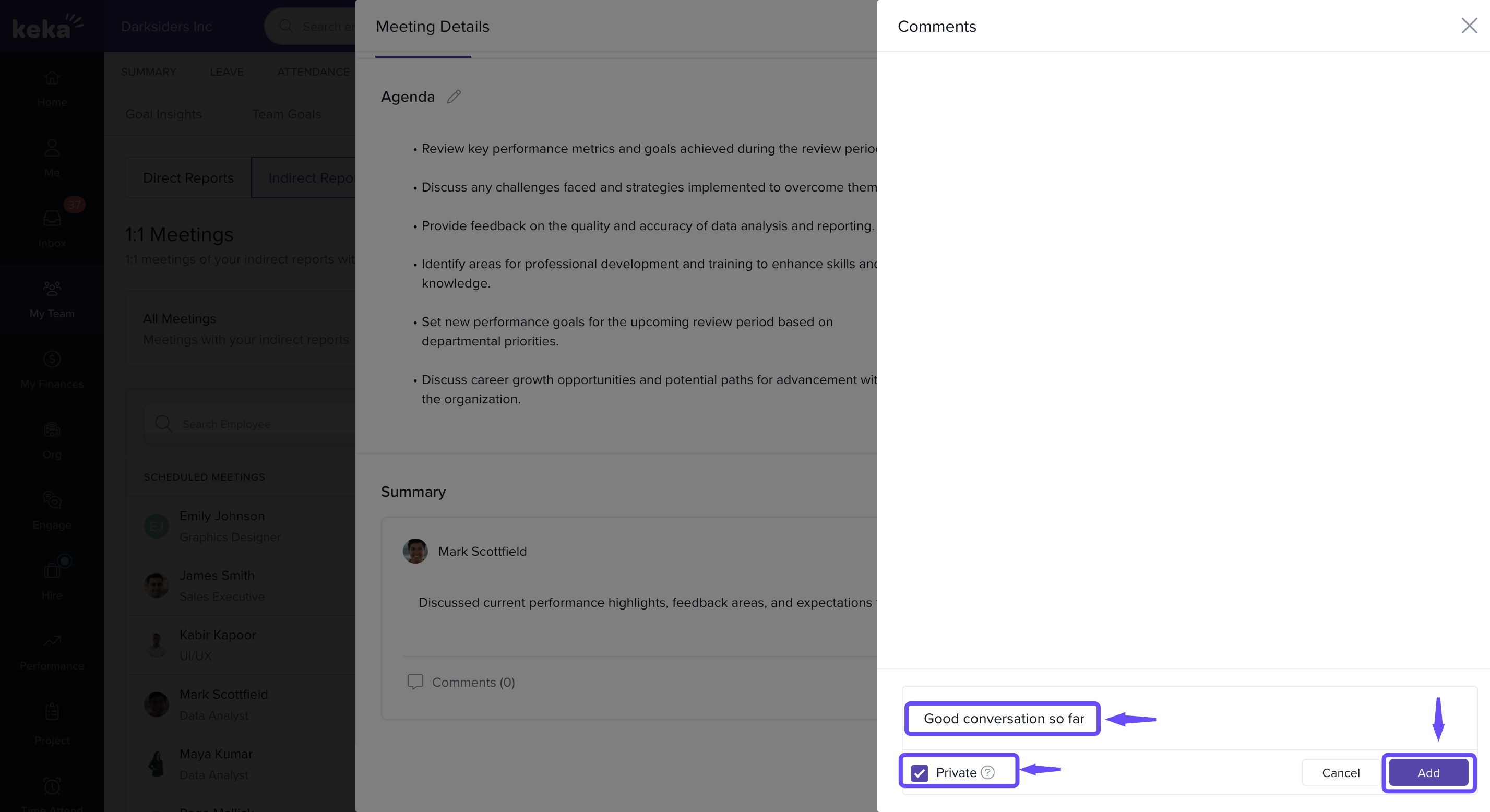
Put the comments and you can also check the box for Private to keep it private for you and click on Add.
Tracking and Completing Meetings
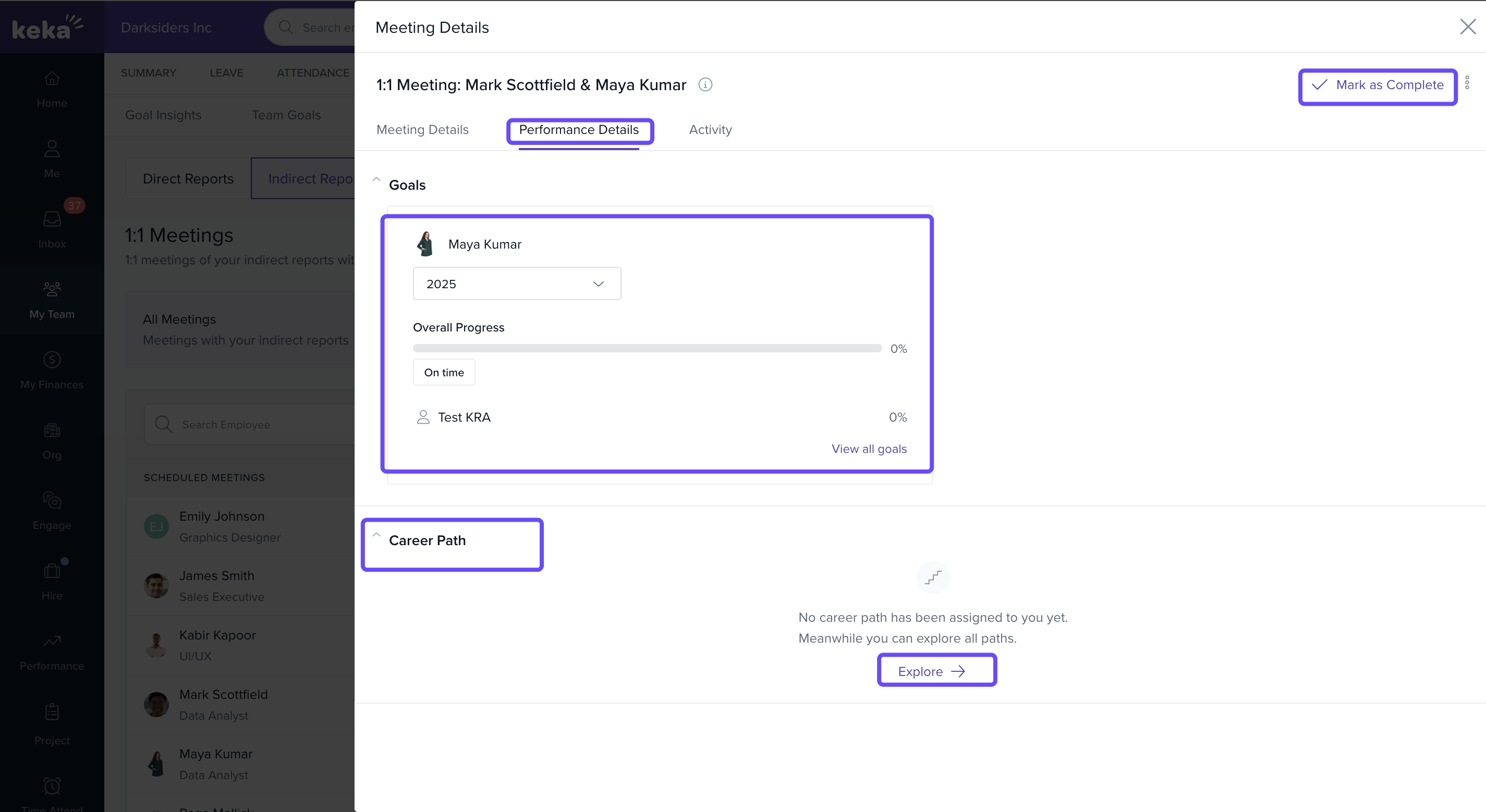
- Within the Performance Details tab, you can monitor the meeting’s overall progress, review the Career Path, and mark the meeting as complete when all actions are finished.
-
You can also track performance goals in the Performance Details section to ensure meetings align with team objectives.
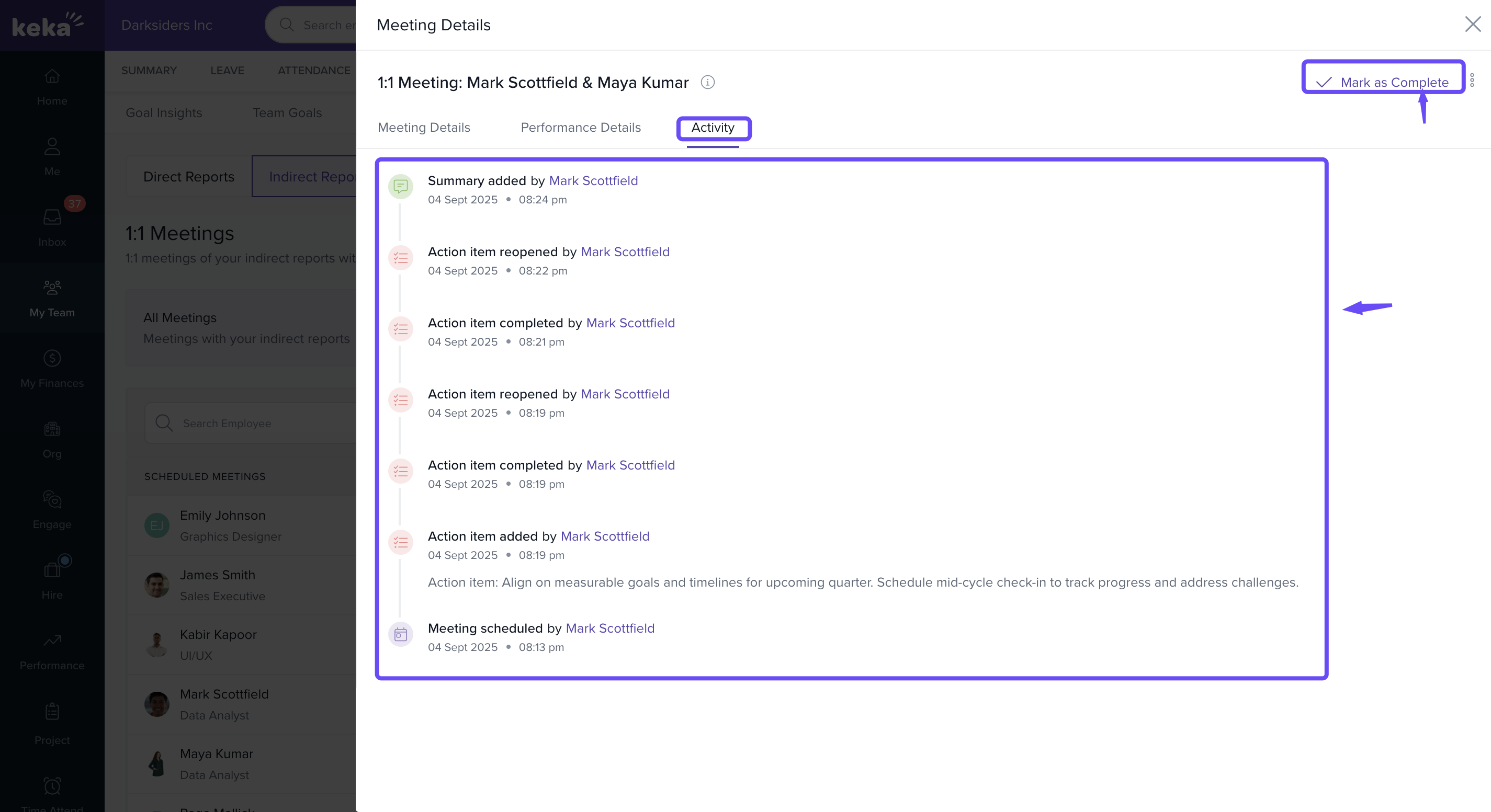
After the meeting, go to the Activity tab in the Meeting Details section to track actions taken.
- Review the meeting activity log, which will show a timeline of changes made to the meeting, such as when summaries and action items were added, and whether they were completed.
-
Once all actions and comments are complete, click Mark as Complete to close the meeting.
Managing Pending and Completed Meetings
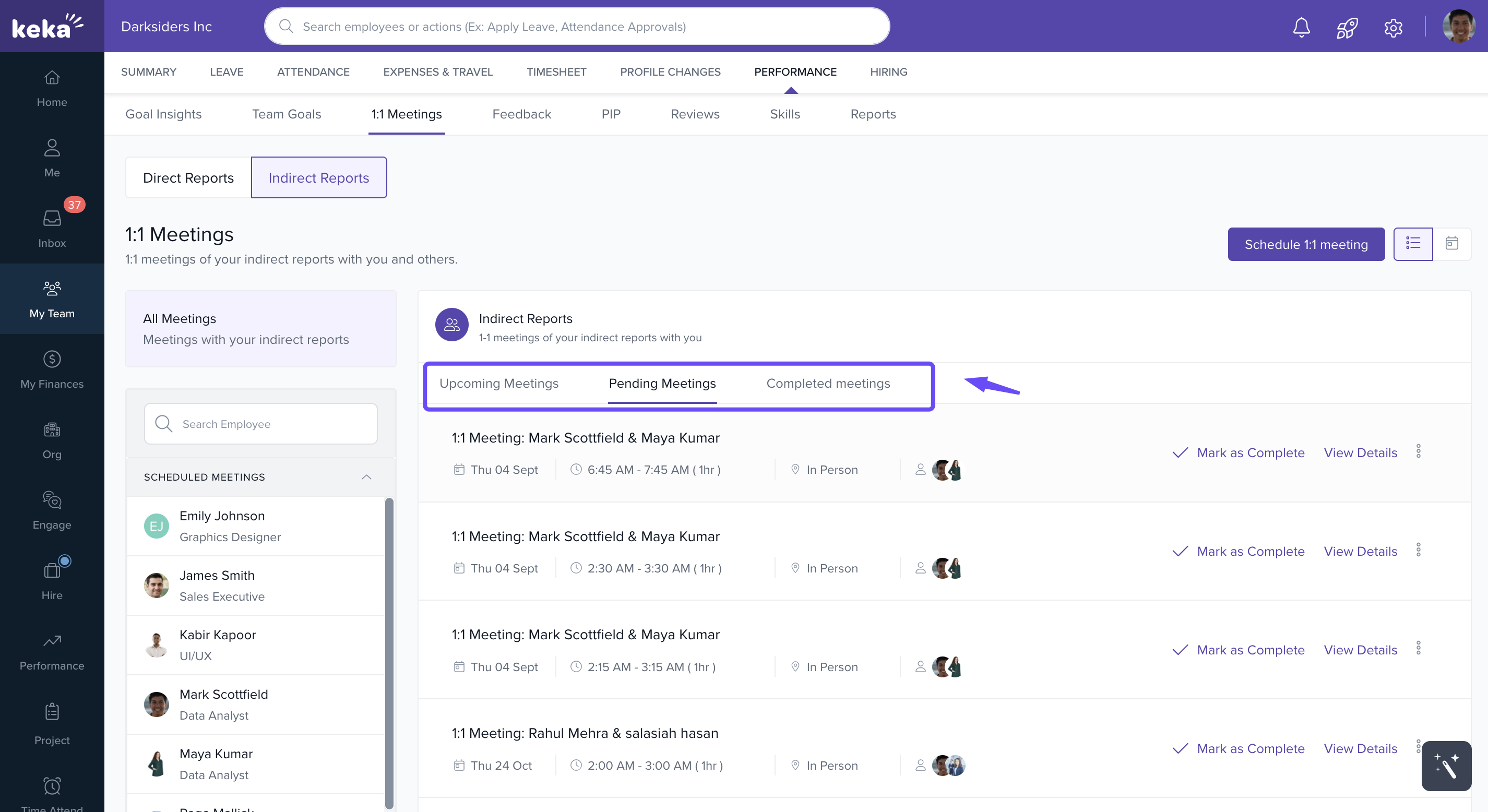
In the 1:1 Meetings module, you can view and manage Upcoming, Pending, and Completed Meetings.
Under the Direct or Indirect Reports section, use the Pending Meetings tab to track meetings that are yet to occur or need action.
For each meeting, click View Details in Pending Meetings tab to see additional information or update agenda items, action items, or comments.
Once a meeting is completed, click Mark as Complete to update the status of the meeting and close it.
Review completed meetings in the Completed Meetings tab to refer back to previous meetings, summaries, and action items.
Notes & Tips
Use agenda templates to ensure your meetings stay structured and save time.
Make sure each action item has a clear owner and due date for follow-up.
AI-generated agendas help you quickly create structured meeting agendas when unsure.
Use recurring meetings to automate regular 1:1 sessions with your team.
How This Helps
Streamlines scheduling, ensuring 1:1 meetings are set up efficiently with minimal effort.
Improves follow-ups by documenting agendas, action items, and summaries for easy tracking.
Saves time with predefined templates and AI-generated agendas, avoiding repetitive setup.
Supports employee growth with regular, structured 1:1 meetings that foster alignment and development.
With these simple steps in Keka, you can easily schedule, manage, and track 1:1 meetings with your direct reports, ensuring clear communication and continued employee development.
Comments
0 comments
Please sign in to leave a comment.